Photo: unsplash.com
Germany is an economic giant that attracts entrepreneurs from all over the world. However, as the publication empleyo.net writes, starting your own business here “is not for the faint of heart.” This process is structured but highly bureaucratic, requiring completion of nine main stages.
The first and most important step is defining the idea and creating a detailed business plan. German authorities require a detailed, realistic, and well-structured document covering market analysis, the operating model, financial forecasts, and the chosen legal structure. This plan is mandatory for:
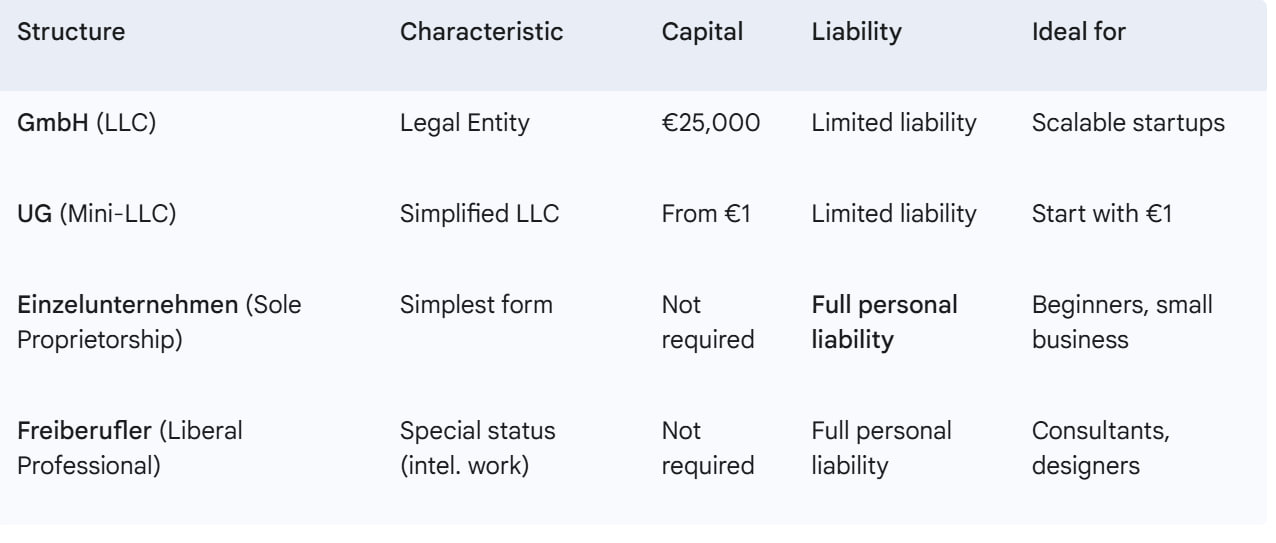
The choice of the correct company form determines your personal liability and capital requirements:
Non-EU citizens must apply for a Residence Permit for Self-Employment (Aufenthaltserlaubnis zur Ausübung einer selbstständigen Tätigkeit). This process requires a thorough business plan, proof of financing, and approval from local authorities, such as the IHK.
However, citizens of Ukraine who hold temporary protection status under § 24 AufenthG already have the right to self-employment. This provides a critical advantage, as, due to the extension of the status until March 2027, they can focus on their business, bypassing the complex stage of obtaining a special self-employment visa.
After resolving the residency issue, it is necessary to register the activity with the authorities. If your activity is commercial (Gewerbe), you must register it with the local Gewerbeamt (Trade Office). This step is only unnecessary for Freiberufler.
The legal structure directly determines tax obligations. Before moving to payment, you must obtain a Steuernummer and Umsatzsteuer-Identifikationsnummer (VAT/Sales Tax Number) from the Finanzamt, unless you fall under the Kleinunternehmer (Small Business) status limit (€22,000 annual turnover).
Your legal form determines the specific taxes:
In Germany, all entrepreneurs must have a dedicated business bank account for all transactions related to entrepreneurial activity and cannot use personal cards. The statutory capital is also deposited into a separate Business Account if you establish a GmbH. All accounting related to the account must strictly comply with German accounting rules, which often requires hiring a tax consultant (Steuerberater).
In parallel with tax registration and opening an account, legal entities and most merchants are required to record their activities with state and industry institutions, ensuring their official status:
It is necessary to settle matters regarding medical and pension insurance. The self-employed are responsible for covering these expenses entirely themselves, which is a significant cost item and must be considered in the financial model.
After completing all stages, you can start working. However, the paperwork never stops — regular tax returns, reports, permit renewals, and communication with a tax consultant become an integral part of life for a German entrepreneur.
OpenAI has updated the rules for using its services, and from now on, ChatGPT is…
American chipmaker Nvidia Corporation, a global leader in graphics processors and video adapters, made history…
The Ukrainian Diia app has become a benchmark for a digital state: ID cards, business…
OpenAI has officially unveiled its own web browser — ChatGPT Atlas, aiming to transform how…
Amazon is preparing for the largest automation in its history — and possibly the biggest…
Elon Musk’s company continues to set cosmic records. SpaceX has officially surpassed the 10,000 launched…