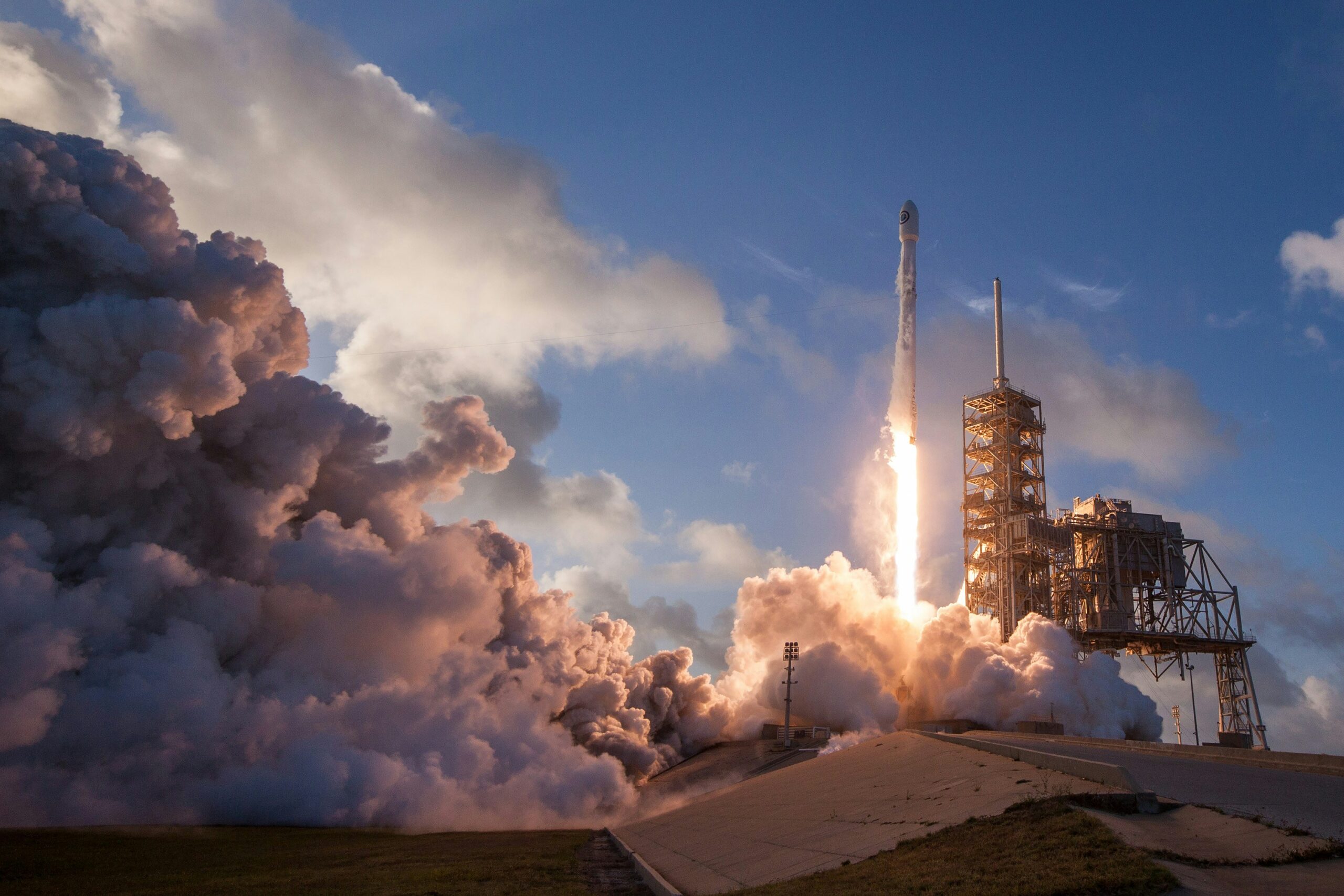
Elon Musk’s company continues to set cosmic records. SpaceX has officially surpassed the 10,000 launched Starlink satellite mark, securing its title as the largest orbital constellation in history. This milestone was reached following the successful deployment of 56 more satellites using two Falcon 9 rockets last Sunday.
Thanks to these missions, SpaceX has conducted 132 launches throughout 2025. The company has thus already equaled its annual record for the number of launches, with two months remaining until the end of 2025. This demonstrates the unprecedented speed and reliability with which SpaceX is realizing its ambitious plans.
Although over 10,000 satellites have been launched, according to independent astronomer Jonathan McDowell, who maintains a detailed public tracker, about 8,600 units are actively operational.
The remaining satellites, which have a lifespan of about five years, have either been deliberately deorbited or have burned up in the atmosphere. This is a critically important aspect of Starlink’s operation:
Since the first test launch in 2018 and the commercial start in 2021, Starlink has become a true megaconstellation. The network’s goal is to provide stable, high-speed internet with low latency anywhere on the planet.
SpaceX already has permission to deploy 12,000 satellites, but Elon Musk is not stopping there. The company aims to place over 30,000 satellites into Low Earth Orbit to ultimately ensure global coverage.
In parallel with its record-breaking launch cadence, SpaceX is actively implementing technological innovations. In particular, the company is opening its Starlink network to third-party satellites, utilizing a new laser communication system. This allows Starlink to function not only as an internet service provider but also as a key element for data exchange between other orbital vehicles.
Amidst these successes, SpaceX also completed the most successful flight of its Starship vehicle following a series of test failures, demonstrating a technical advantage over competitors such as Amazon’s Project Kuiper.

